
Challenges
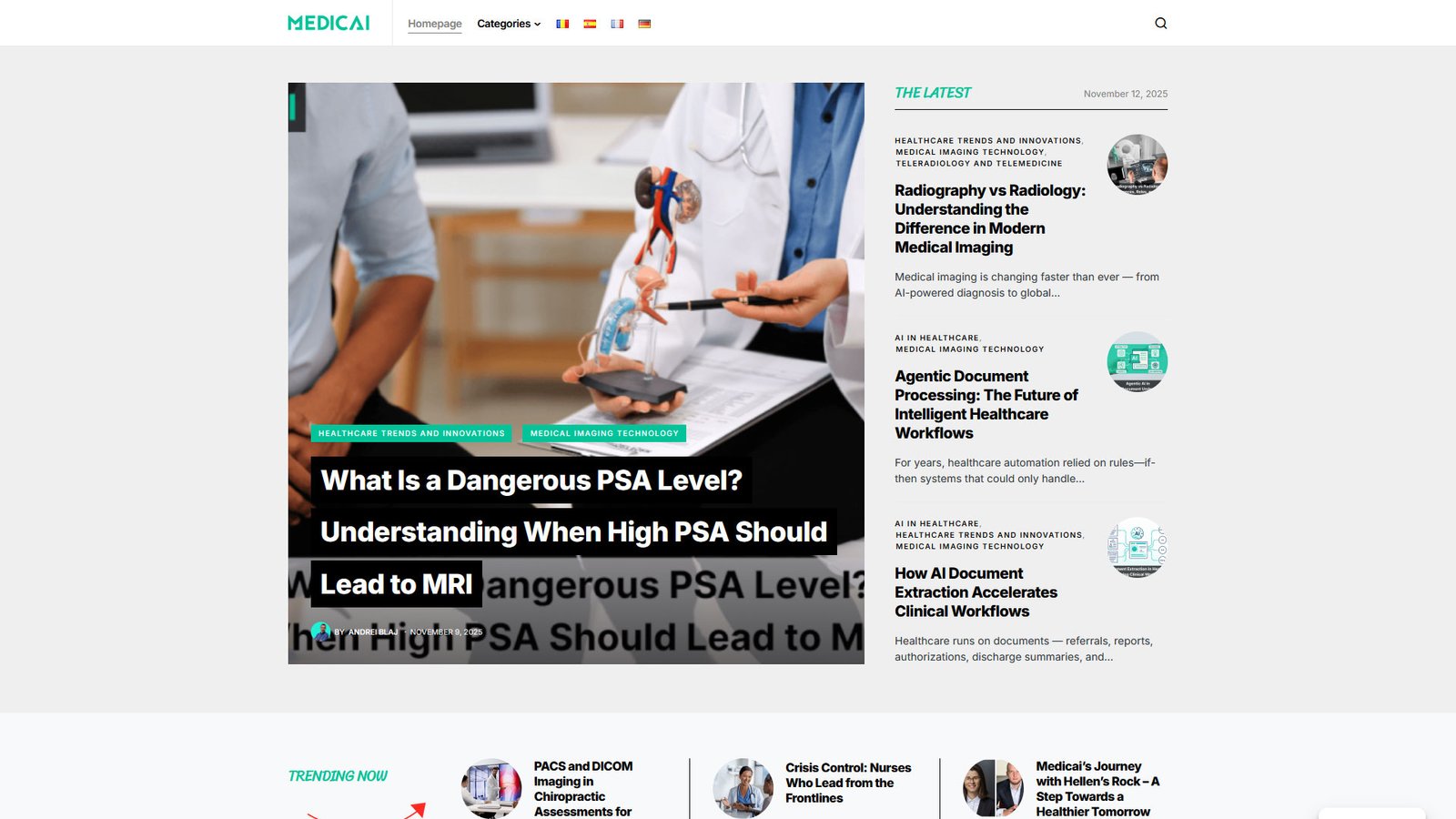
Medicai’s blog attracted diffuse, non-strategic traffic; oncology/PACS topics weren’t clustered; key pages were thin on E-E-A-T for YMYL; internal linking was underutilized; technical debt (CWV, schema gaps) limited rich-result eligibility. Stakeholders needed measurable pipeline (demos/meetings), not vanity metrics—while keeping HIPAA/GDPR and clinical accuracy front and center.

Goals
Build topical authority in PACS/DICOM/oncology workflows, improve demo-ready traffic, and strengthen E-E-A-T signals post-core updates. Re-architect IA, speed up pages, deploy healthcare schema, and create clinician-grade content that legal approves and CFOs respect. Shift mix from generic “health” queries to bottom-funnel MedTech intent tied to demos and partnerships.

Research and Discovery
We audited Search Console/Ahrefs to map keyword cannibalization, SERP intent, and entity gaps across PACS, DICOM viewer, tumor boards, teleradiology, and imaging AI. Benchmarked against leaders and disruptors (enterprise PACS, AI vendors) to identify linkable angles and overlooked BOFU keywords. Interviewed product/clinical stakeholders to capture clinician language and compliance constraints. Ran CWV diagnostics, structured-data checks, and crawl budget analysis. Defined KPIs (qualified sessions, demo submissions, SQLs) and content acceptance criteria (citations, review by a medical expert, on-page disclosures) to meet YMYL standards.

Synthesize Findings
Insights: (1) BOFU demand lives in modality/workflow terms (e.g., PACS for oncology, VNA vs PACS, teleradiology hand-offs). (2) Earn trust with expert-reviewed pages, citations, author bios, and transparent claims. (3) Speed, schema, and internal links unlock rich results and reduce pogo-sticking. (4) Educational assets (free online DICOM viewer, checklists) attract natural links. (5) Mid-2025 traffic was skewed to unrelated posts—prune/merge and refocus clusters. These inputs shaped an IA where pillars feed clusters, clusters feed conversion pages, and each page reinforces entity signals.

Ideation and Solution Generation (≈100 words)
We designed three pillars—Oncology PACS, DICOM Viewer & Interop, Imaging AI in Care Pathways—with cluster pages, comparison guides, and BOFU templates (features, pricing, integrations). Shipped entity-rich briefs, reviewer workflows, and schema (Organization, Product, FAQ, HowTo). Built a link-earning playbook: clinical explainers, dataset roundups, and “free tools” pages. Implemented CRO quick wins: demo CTAs, sticky bars, trust blocks, and intent-based internal linking from cluster posts to demo pages.

Reflection
Wins: topical consolidation, expert-reviewed content, and structured data delivered durable growth—sustaining momentum through Google’s June core update. The biggest unlock was pruning/merging off-topic posts and doubling down on oncology/tumor-board workflows. What we’d start earlier: design system for medical citations and reviewer notes at scale; deeper author pages. What we’d do next: expand multilingual pages for EU markets and create guided demos aligned to search intent.
Final Solutions
- Re-architected IA into three MedTech pillars with BOFU landing pages
- Dozens of expert-reviewed, entity-optimized articles and comparison guides
- Healthcare schema, CWV fixes, and cleaner crawl paths
- Free-tools hub (online DICOM viewer) to earn editorial links
- CRO enhancements driving demo submissions and sales conversations
- Clear governance: medical reviewer workflow, citations, disclaimers, and analytics mapped to MQL/SQL.